EXTRA
Fresh Egg Pasta
Flour, eggs and a bit of kneading become pasta. Bought pasta is excellent and you absolutely don't need to make this — sometimes making the thing is half the point.
Method
Make the dough
Put the flour in a bowl or pile it onto the bench. Add the eggs and salt, then mix until everything starts coming together into a rough dough.
Decide whether it needs help
Knead the dough together. If it genuinely refuses to come together after a few minutes, add water about a teaspoon at a time. If it's very sticky, dust it with a little more flour instead.
Eggs vary in size and flour doesn't absorb exactly the same amount of liquid every day. The recipe gets you into the right neighbourhood; the dough gets the final say.Knead it
Knead for about 8–10 minutes until the dough becomes smooth, firm and noticeably more elastic. It should feel much smoother than when you started.
Let it rest
Wrap the dough or cover it well and leave it at room temperature for at least 30 minutes.
The rest gives the flour time to fully hydrate and lets the gluten relax. That means the dough becomes considerably easier to roll without constantly springing back at you.Work in smaller pieces
Divide the dough into 3–4 pieces. Keep the pieces you're not working with covered so they don't dry out.
Especially if you're rolling by hand, smaller pieces are much easier to get thin and even. Trying to turn the entire batch into one enormous pasta sheet is mostly a good way to discover that your kitchen bench isn't long enough.Roll it out
Flatten one piece of dough and roll it progressively thinner. A pasta roller makes this very easy, but a rolling pin works perfectly well. No rolling pin? A clean wine bottle is an entirely respectable substitute.
Turn or rotate the dough as you roll and use a little flour if it starts sticking. You're aiming for a thin sheet where you can begin to see the shadow of your hand through it, but it should still be strong enough to move without tearing.Cut whatever pasta you're making
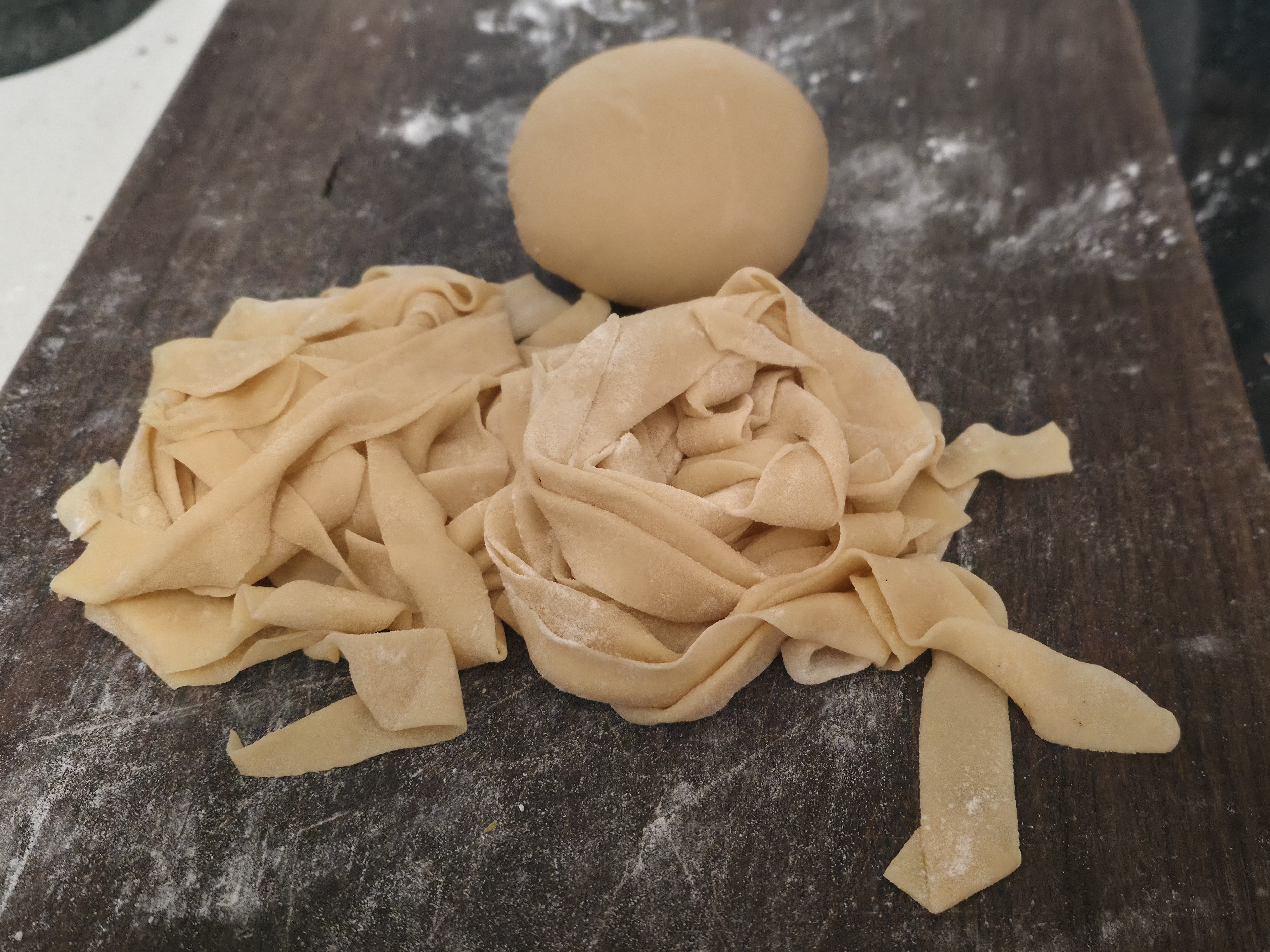
Dust the sheet lightly with flour, then cut it into the shape you want. For ribbons, loosely fold or roll the sheet before cutting, then immediately shake the strips apart.
Make loose nests
Dust the cut pasta lightly with flour or semolina and gather it into loose nests until you're ready to cook.
Fresh pasta is soft enough to stretch under its own weight and enthusiastic enough to stick to itself. Loose floured nests generally behave better than leaving a heavy bundle hanging around.Boil the water
Bring a large pot of water to the boil and season it with salt. Around 8–10 g salt per litre of water is plenty.
Cook it quickly
Drop the fresh pasta into the boiling water and gently separate the pieces. Start checking after about 2 minutes. Depending on how thick you rolled it, fresh pasta will usually be ready in about 2–4 minutes.
Fresh pasta cooks much faster than dried pasta. Eat a piece rather than putting complete faith in the clock.Save some pasta water
Before draining, scoop out a cup of the cooking water. Drain the pasta, then get it into the sauce while it's hot. Use a splash of pasta water if the sauce needs loosening or help coating the pasta.
EAT ME WITH