EXTRA
Stock From Whatever You've Got
Bones, scraps, water and a few aromatics become something considerably more useful than the bin. Make the quick version or roast everything first when you want deeper flavour.
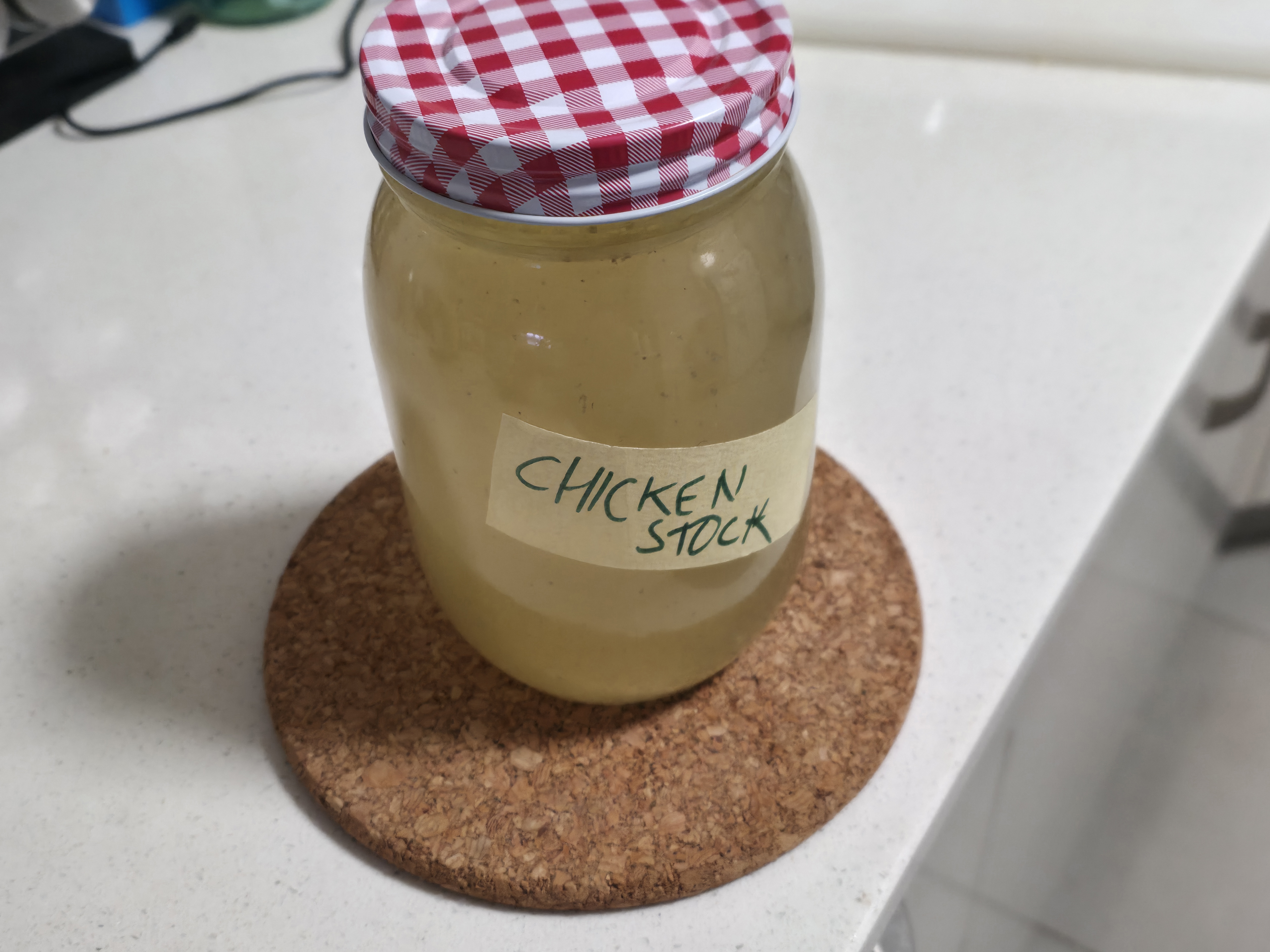
BASIC
Bones or carcasses, onion, water and whatever sensible scraps are around. Garlic, bay leaves and peppercorns should go in if you've got them.
Method
Put everything in a pot
Add the bones or trimmings, onion, any useful vegetable scraps, and the garlic, bay leaves and peppercorns if you have them.
Cover with water
Add enough cold water to comfortably cover everything. More water gives you lighter stock; less water gives you stronger stock. This does not need laboratory precision.
Bring it up gently
Bring the pot towards the boil, then reduce the heat until it is just gently simmering.
SimmerKeep the liquid gently bubbling. It should be active, but not rolling and splashing like a full boil.Cooking words →Leave it alone
Simmer gently for about 1–2 hours for chicken, pork or general meat stock. Fish stock needs much less time — around 30–45 minutes is plenty. Skim off any particularly ugly foam if you feel like it, but don't turn this into a hobby.
Strain
Pour the stock through a sieve into another pot or heatproof container. Press lightly on the solids, then throw them out.
Don't salt it yet
Leave the stock unsalted. You'll usually reduce it or add it to something else later, and salt becomes much harder to control once the liquid concentrates.
Cool and store
Cool the stock promptly, then refrigerate what you'll use soon and freeze the rest in useful portions.
UPGRADE
Roast the bones and vegetables first, deglaze all the browned bits and give the pot enough time to build a deeper stock for gravy, sauces and soups.
Method
Heat the oven
Heat the oven to 220°C (425°F).
Roast the bones
Spread the bones and trimmings over a roasting tray with the onion, carrot and celery if using. Add a small amount of oil and roast until everything is properly browned, about 35–50 minutes.
BrownLet the food develop actual brown colour. Grey meat can be cooked, but it is not browned. If liquid pools in the pan, use more heat or cook in smaller batches.Cooking words →Add the tomato paste
If you're making beef or lamb stock, smear the tomato paste over the bones and vegetables for the final 10 minutes of roasting. Let it darken without burning.
Deglaze the tray
Transfer everything to a large pot. Pour a little hot water into the roasting tray and scrape up the dark browned bits stuck to the bottom, then pour that into the pot as well.
DeglazeAdd liquid to a hot pan and scrape up the browned bits stuck to the bottom. Those bits are flavour, not washing-up failure.Cooking words →Add the aromatics
Add the garlic, bay leaves and peppercorns, then pour in enough cold water to cover everything.
Simmer gently
Bring the pot up slowly, then hold it at a gentle simmer. Give chicken stock around 2–3 hours and beef, pork or lamb stock 3–5 hours if you've got the time. Add a little water if the bones become exposed.
SimmerKeep the liquid gently bubbling. It should be active, but not rolling and splashing like a full boil.Cooking words →Strain
Strain through a sieve into a clean pot. Discard the solids.
Concentrate it if useful
If you want a stronger stock for sauces or gravy, simmer the strained liquid until it reduces to the strength you want.
ReduceCook a liquid so some of its water evaporates, leaving less liquid with a stronger flavour and usually a thicker texture.Cooking words →Still don't salt it
Keep the finished stock unsalted. Season the food you eventually make with it instead.
Portion it
Cool promptly and freeze in amounts you'll actually use — small containers or ice-cube-sized portions are particularly useful for sauces.
EAT ME WITH