MAIN
Chicken Tray Bake
Chicken, potatoes and vegetables cooked together on one tray. Or give the chicken an overnight head start, make the potatoes properly crunchy and turn everything stuck to the tray into a sauce.
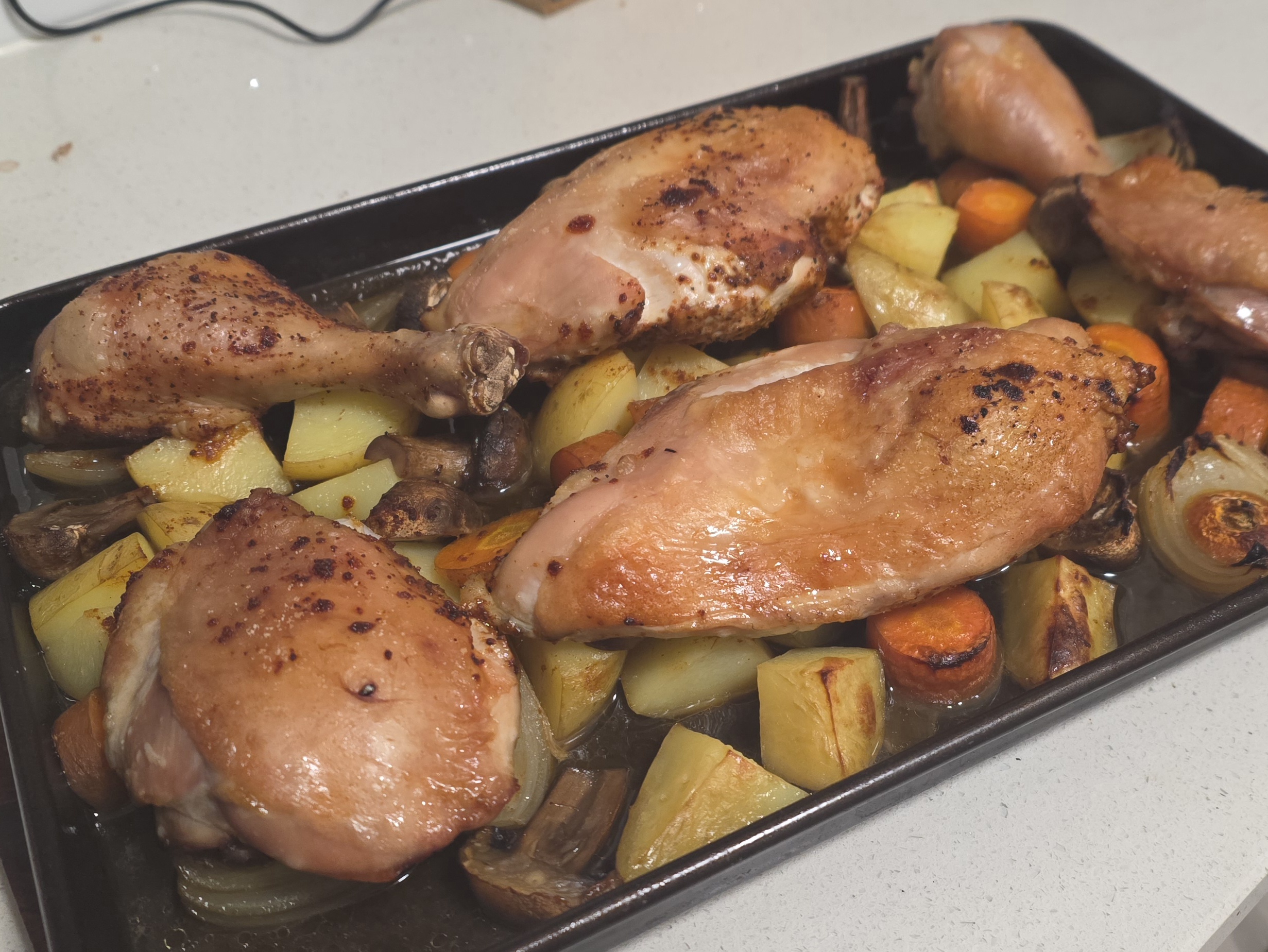
BASIC
Chicken, potatoes and vegetables go onto one tray and dinner comes back out. There's a reason tray bakes exist.
Method
Heat the oven
Heat the oven to 210°C (410°F) fan-forced.
Put dinner on a tray
Put the potatoes, carrots, onion and garlic on a large baking tray. Add about half the oil, season with salt and black pepper and toss everything around.
Season the chicken
Rub the chicken with the remaining oil, oregano or mixed herbs, paprika if using, salt and black pepper.
Give the chicken some air
Sit the chicken over and around the vegetables with the skin facing upwards if it has skin. Try not to bury the chicken underneath the vegetables.
Crowding everything tightly together traps steam. A bit of room around the chicken gives the skin and vegetables a better chance of browning instead of quietly boiling on the tray.Roast
Roast for about 40–50 minutes, turning the vegetables once if you remember. The chicken should be browned, the potatoes tender and the thickest part of the chicken at least 74°C (165°F).
Finish with lemon
Squeeze some of the roasted lemon over everything, taste a potato and add a little more salt or black pepper if dinner hasn't quite come alive yet.
UPGRADE
Dry the chicken skin overnight, rough up parboiled potatoes for a proper crust and turn the browned bits and chicken juices left on the tray into a lemon-Dijon pan sauce.
Method
Do tomorrow's chicken tonight
The night before cooking, pat the chicken skin dry. Season all over with the salt, black pepper and paprika if using, then place the chicken skin-side up on a plate or tray and refrigerate uncovered overnight.
Keep it refrigerated the whole time — preferably on a lower shelf where raw chicken can't drip onto anything else. The uncovered part is deliberate: we're trying to dry the skin, not leave the chicken sitting around at room temperature.Heat the oven
When you're ready to cook, heat the oven to 220°C (430°F) fan-forced.
Parboil the potatoes
Put the potatoes in a large pot, cover with water and bring to the boil. Add the bicarbonate of soda if using and cook for about 8–10 minutes. You want the outsides softening while the centres are still holding together.
Rough them up
Drain the potatoes well, then shake them around in the pot until the edges become roughed up and covered in a starchy-looking coating. Add the olive oil and some salt and toss again.
This ugly fluffy coating is exactly what you want. More rough surface means more surface available to become crisp.Start the potatoes
Spread the potatoes over a large baking tray and roast for about 15 minutes to give them a head start.
Add the chicken
Turn the potatoes, then add the onion, garlic and lemon. Sit the dry-brined chicken thighs on the tray skin-side up, making sure the skin isn't covered by vegetables. Add the herbs if using.
Roast until properly crisp
Roast for another 35–45 minutes until the chicken skin is deeply golden and crisp and the potatoes have developed a crunchy crust. The chicken should reach at least 74°C (165°F) in the thickest part.
Protect your achievement
Move the chicken and potatoes to a serving plate or another tray and keep them somewhere warm. Don't cover the chicken tightly or the trapped steam will soften the skin you spent all this time creating.
Save the good stuff
Pour off most of the loose fat from the roasting tray, leaving the dark sticky browned bits behind. Squeeze one or two soft roasted garlic cloves from their skins and keep them for the sauce.
Deglaze the tray
Pour a small splash of the hot chicken stock onto the still-hot roasting tray and scrape up the browned bits with a wooden spoon or spatula. Pour all of that into a small saucepan.
DeglazeAdd liquid to a hot pan and scrape up the browned bits stuck to the bottom. Those bits are flavour, not washing-up failure.Cooking words →Unless you know your roasting tray is safe for direct stovetop heat, don't put it over a burner. Scraping it with hot liquid gets us the flavour without sacrificing the tray.Build the sauce
Add the wine if using, the remaining chicken stock, Dijon and the roasted garlic. Bring to a simmer and reduce until the sauce tastes concentrated and lightly coats a spoon.
ReduceCook a liquid so some of its water evaporates, leaving less liquid with a stronger flavour and usually a thicker texture.Cooking words →Brighten it
Add the lemon juice, taste, then add more if the sauce needs it. Add black pepper and check whether it actually needs any salt before reaching for it.
Finish with butter
Take the saucepan off the heat. Add the cold butter a piece at a time and whisk until it melts into the sauce and makes it glossy.
Do this off the heat. The butter is finishing and enriching the sauce, not being boiled into submission. If the sauce gets fiercely hot after the butter goes in, it can become greasy rather than smooth.Serve
Put the crispy chicken and potatoes on the plate and spoon the sauce around them rather than drowning the chicken skin in it. You worked too hard for that crunch to immediately make it wet.
EAT ME WITH