MAIN
Roast Beef
Two very different roast dinners: slow-cooked beef with vegetables and gravy, or a reverse-seared roast built around temperature control and a properly browned crust.
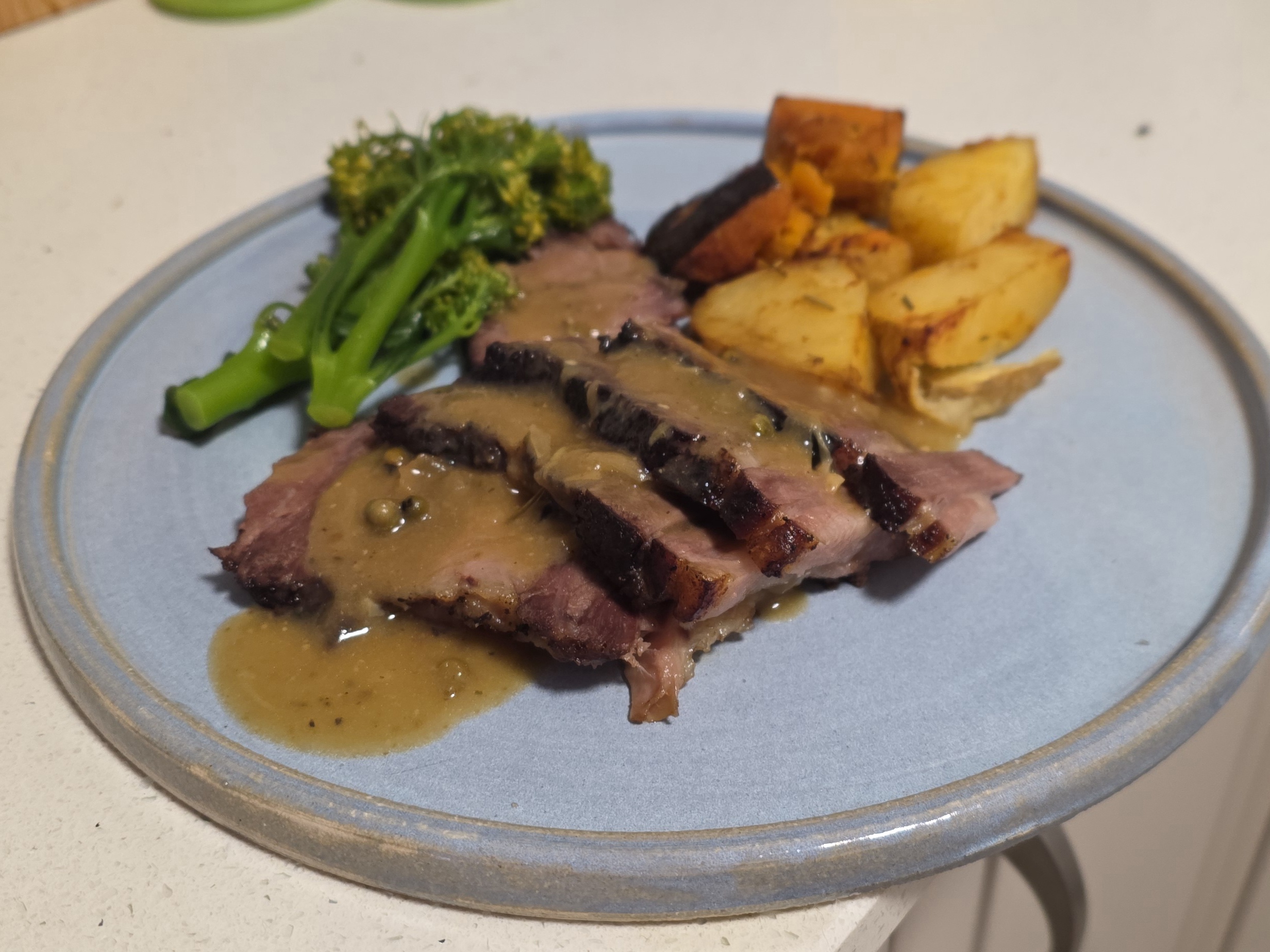
BASIC
A forgiving roast, vegetables and stock in one pot. Cook until tender, then turn the cooking liquid into gravy.
Method
Heat the oven
Heat the oven to 150°C (300°F).
Season the beef
Pat the beef dry, rub it with the oil and season it well with salt and black pepper.
Build the pot
Put the onion and carrot into a large casserole dish or oven-safe pot and sit the beef on top. Pour the stock and Worcestershire sauce around the beef rather than directly over it.
If your pot can go on the stove and you feel like browning the beef first, go for it. A few minutes on each side will add extra flavour to the gravy. If you don't feel like it, don't. This version has several hours to sort itself out.Cover and slow cook
Cover tightly with a lid or foil and cook for about 2½ hours.
Add the potatoes
Add the potato chunks around the beef, spoon a little of the cooking liquid over them, cover again and return everything to the oven.
Cook until tender
Cook for another 1–2 hours, checking occasionally, until the beef is very tender. A thermometer may be somewhere around 85–95°C (185–205°F), depending on the cut, but tenderness matters more here: a fork or small knife should push into the meat with very little resistance.
This is not a pink-roast temperature game. Different slow-cooking cuts soften at different rates. Start checking once the beef is well into the 80s°C and let the texture decide when it is ready.Rest the beef
Move the beef and vegetables to a serving dish and loosely cover them while you make the gravy.
RestLeave the food alone for a short time after cooking. For meat, this lets the temperature settle before you cut into it.Cooking words →Make the gravy
Mix the cornflour with the cold water until smooth. Skim off any excessive fat from the cooking liquid, then stir in the cornflour mixture. Bring it to a simmer until the gravy thickens, then taste and adjust the salt and pepper.
SimmerKeep the liquid gently bubbling. It should be active, but not rolling and splashing like a full boil.Cooking words →If your roasting pot is safe on the stovetop, do this directly in the pot. Otherwise pour the liquid into a saucepan. It is technically one extra pan, but there are limits to what we're prepared to lie about.Serve
Slice the beef if it still wants to be sliced. If it starts falling apart instead, accept that as a perfectly good outcome. Serve with the vegetables and plenty of gravy.
UPGRADE
Low heat, a thermometer and a hard final sear for the kind of evenly pink roast beef that looks suspiciously picture perfect.
Method
Salt the beef
Pat the beef dry and season it all over with the salt. If you have time, put it uncovered in the fridge for at least 4 hours or overnight. If dinner planning has not reached that level, season it now and continue.
Salting ahead gives the salt time to move into the meat and also helps dry the outside, which makes getting a proper crust easier later.Heat the oven gently
Heat the oven to 120°C (250°F). Put the beef into a roasting dish, ideally with a thermometer probe in the thickest part of the centre.
Cook to temperature, not time
Roast gently until the centre reaches the low-oven pull temperature for the doneness you want. Start checking earlier than you think you need to.
A roast's thickness and shape matter enormously. Two pieces of beef that weigh the same can cook at very different speeds, which is why minutes-per-kilogram rules are useful mainly for creating false confidence.Rest while the oven gets angry
Take the beef out and let it rest for about 20–30 minutes. Meanwhile, turn the oven as high as it will reasonably go — around 250°C (480°F) if it can reach it.
RestLeave the food alone for a short time after cooking. For meat, this lets the temperature settle before you cut into it.Cooking words →Dry the outside
Pat the outside dry again if necessary, rub it very lightly with oil and add black pepper.
Build the crust
Put the beef back into the very hot oven for about 8–12 minutes, until the outside is deeply browned. Check the internal temperature near the end rather than assuming the clock has nailed it.
You can also brown the roast in a very hot frying pan if that is easier. The low-temperature cook handled the inside; this step exists almost entirely to make the outside taste good.Check the centre
Check the thickest part with the thermometer. If it is still below the final temperature you want, give it another few minutes and check again.
Make the pan sauce
If you're making the sauce, move the beef to a board. Put the roasting pan over medium heat if it is stovetop-safe, or scrape the browned bits into a saucepan. Add the wine, stock or a mixture of both and scrape up everything stuck to the pan. Simmer until reduced to a light sauce. Stir in Dijon if using, then take it off the heat and stir through the cold butter.
ReduceCook a liquid so some of its water evaporates, leaving less liquid with a stronger flavour and usually a thicker texture.Cooking words →The butter goes in off the heat. It gives the sauce a little body and gloss without turning it into gravy.Rest briefly and carve
Give the roast about 5–10 minutes before carving across the grain. It has already had its major rest before the final sear, so it does not need another half-hour.
RestLeave the food alone for a short time after cooking. For meat, this lets the temperature settle before you cut into it.Cooking words →
EAT ME WITH